
My husband and I recently attended a couple of workshops: one on fostering family connections within foster care and one on adoption. They were both very eye opening and the biggest things that I took away were the concept of openness (especially with regards to adoption) and the principle of addition. This principle says that it is far more beneficial to add to a family circle than to subtract from it.
Never have I been put in a position where I could see this principle more clearly than now as a foster parent. Last month marked the one year anniversary of our first foster placement and our beginning of this journey. Looking back, I am astounded at the changes that we have made to our lives and our perspectives. When we started fostering, I will admit to coming into this with an “us” vs. “them” mentality. I could not have been more wrong.
Mother’s Day arrived only a few weeks into our foster care journey last year and it was filled with all kinds of new meaning as I held our first newborn foster baby. We had been told that his situation was one that would likely lead quickly to a permanent placement. I had no idea in that moment just how quickly our lives would be completely turned upside down, so I cherished the moment. But as his situation began to progress, things became more uncertain. Less than 6 months later I would hand him back into his mother’s waiting arms. And that’s the moment that I began to see that perhaps my “circle” was too small. Perhaps I had been living by the principle of subtraction rather than addition. Perhaps my vision was too narrow. My heart too closed.
One of the workshops touched on how much adoptions have changed over the last 50 years and how it used to be the norm to have a completely closed adoption. It was something that families didn’t openly talk about and even withheld from the children adopted. But now, we have seen a major shift in how adoptions are being handled as we see the repercussions of those closed adoptions on adoptees and their families. Now the focus has moved more into the direction of openness with adoptees and their birth families – enabling them to maintain relationships with birth family, while being welcomed into their adoptive families. Obviously, all such decisions must be made in the best interests of the child and what that connection to birth family looks like is completely different for each individual family. But, we are in essence, moving away from the practice of “creating” orphans to put them in new families and more towards linking families together.

It is never a simple thing for child to leave one home and go to another. Whether it is because of a death, a foster placement, or an adoption, whether it is a voluntary decision made between two agreed parties or a court injunction made to protect a child, there will always be pain involved. There will always be an orphan left in the process. And unfortunately this is not the only example. Orphans are made every day through all different kinds of circumstances. Because sometimes the orphan is not a child in your arms or on the street. Sometimes it’s the mom or dad who had to relinquish them, who couldn’t care for them. Sometimes it’s the victim of some kind of abuse. The kind that leaves emotional scars long after the blood has dried and the physical wounds have healed. But sometimes it’s the cashier at the grocery store or the guy who pumps your gas. Sometimes it’s the renowned heart specialist or the successful business owner or the neighbor over the back fence. Because sometimes being an orphan is not a physical state of being, but rather a state of the heart.
Through all of our experiences in foster care over the last year, I am learning to see things from another person’s point of view. Learning that my plans are not always the best. Learning that families are not just made up of blood connection and don’t need to grow in only one way. I have seen so many families that have been impacted by the fact that they simply cannot thrive because they are islands. They are alone without community and support. And that reality has rocked mine. We are 6 months removed from that first placement and our circle had been widened. We planned to foster and adopt a baby. Instead we’ve now “adopted” him and his family. I came into this with a “bar the door” mentality and now I am asking how we can open the doors and reach out. I am learning to see with new eyes.
The facilitator of that first workshop asked us two questions: “What can you do?” and “What will you do?” Those questions have been stuck in my head ever since. Each person will answer those questions differently, but for me it means including people in my life that I previously would not have invited in. Sometimes it’s uncomfortable. Sometimes it takes a huge amount of effort. But what worth doing doesn’t require some effort, some discomfort, some pain on our part? Inclusivity is one of the buzz words of today’s society and I feel in its trendiness it has lost both its power and its meaning for people. It is thrown around so frequently, that we can be inclined to tune it out. But I think that to dismiss it all together is to miss something profound. To include someone isn’t just about tolerance. It isn’t just about being accepting. It isn’t just about a lack of discrimination. To include means to draw one in. To make them a part of something. It’s basically the principle of addition. And who invented this principle of addition? Wasn’t God the first to reach down and draw us in? He is the One who modelled what that should look like. The One who puts the solitary in families. The One Who is a Father to the fatherless. And He called us to follow in His footsteps. We need to widen our circles. We need to draw in the orphan and help them to find healing.
“Religion that is pure and undefiled before God the Father is this: to visit orphans and widows in their affliction, and to keep oneself unstained from the world.” ~ James 1:27 (ESV)
When you hear the word orphan, what do you think of? Do you conjure up images from classic literature and movies like Oliver Twist or Annie? Lonely children, peering out from tiny windows of an orphanage or grimy little urchins, hiding in dark corners of forgotten streets? When James wrote this particular passage, he was admonishing the early church to care for the widows and orphans, the oft neglected needy in their midst. The word used for orphan used here is the Greek word orphanos – meaning “orphan, fatherless, comfortless, desolate”. So, the meaning encompasses so much more than just a loss of a parent. The word that jumped out at me was desolate – deserted, joyless, disconsolate, sorrowful, showing the effects of abandonment or neglect, barren, lifeless, devoid of warmth comfort, or hope (Merriam-Webster definition). Haven’t we all felt this way at one time or another? Sometimes, this is just a passing stage of life. Sometimes, just a temporary feeling or passing emotion tied to hurtful or disappointing circumstances. But sometimes, the desolation goes deeper. Becomes a more serious condition. Become wounds that cause the heart to become orphaned. Wounds that tarnish the way that we see and interact with the world. They lead us to believe that this distorted way of seeing is in fact reality, which in turn only drives deeper the point that we are orphans. That we are alone. Until eventually it becomes our identity. But that doesn’t have to be the end. There is still hope.
Interestingly enough, this particular word – orphanos – is only found one other place in the New Testament – in John 14:18 where Jesus said to His disciples before His crucifixion, “I will not leave you orphans; I will come to you”. Here in the moment before their greatest loss, right before they would begin a life of persecution and peril, Jesus gives His promise. The promise that they would never be alone. That we would never be alone. He gave His life to make sure that we would always have a way to be part of His family. Never orphans. Never abandoned. No matter where we are, He has promised to come to us.
Such a beautiful promise and yet there are so many “orphans” who wander alone. So many who do not know this truth. And some who know, but don’t know how to take a hold of it and let the the Father envelop their orphan hearts in His because they live shrouded in the secrecy of their orphaned state. “What can you do?” “What will you do?” We have to learn to look beyond our “safe” circles, beyond our own comfort, beyond our own front doors, and see that orphans come in all shapes and sizes, from all walks of life, from every socioeconomic background and can even be those who are surrounded by family and friends that care about them. We need to be the hand that stretches out, crossing barriers and boundaries, to draw the orphan in. We need to open our eyes to the hurt that lies just beneath the surface of the smiles. And if we find, in our searching, that we are the one with an orphan heart, then perhaps it’s time to stop hiding. Time to acknowledge our condition, ask for help, confront the pain, and find our way to healing. And if we all widen our circles and become the safe places for the orphans we interact with every day, we might just start a revolution. A revolution that could change the world and see a lot less orphans and whole lot more families.
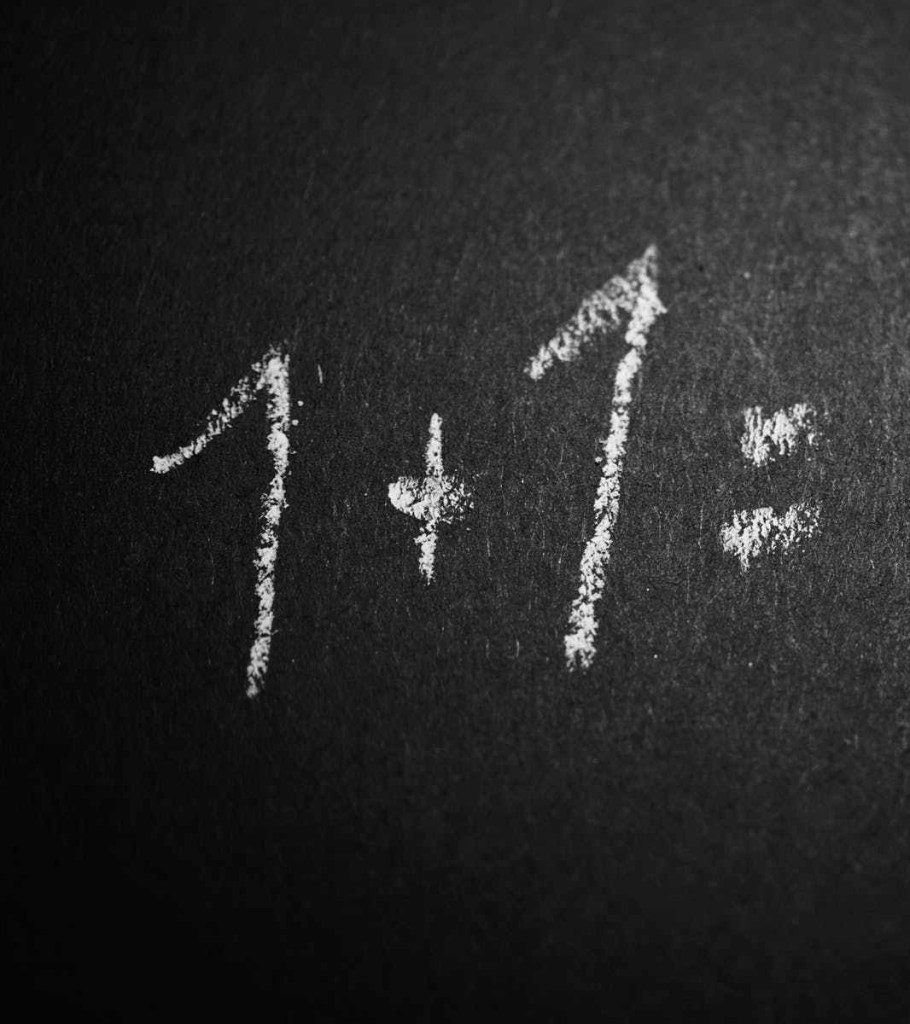
The principle of addition. So simple, it starts with just 1 plus 1.

 Of Shattered Things
So profound and beautiful! What a gift the Father has given us. This was a much needed read tonight!!
LikeLiked by 1 person